Kashmir GI Mart
GI · GI-46 · 2008

Kashmir Pashmina

Hand-spun, hand-woven shawls in 12–16 micron fibre, made nowhere else on earth.

Kashmir Pashmina

Kashmir Pashmina is the world's finest cashmere — fibre spun from the soft undercoat of the Changthangi goat that survives at 14,000+ ft on the Ladakhi plateau. The single strand is 12 to 16 microns thick, less than a sixth of a human hair, and only Kashmiri artisans have the centuries-old hand technique to spin it without breaking it.

A genuine Kashmir Pashmina is hand-spun on a yinder (a wooden spindle), hand-warped on a charkha, hand-woven on a wooden frame loom and finished without a single industrial pass. Every step that machine-made cashmere skips is the reason the original costs what it costs — and lasts a lifetime.

The process

How it’s made

How a single shawl is made

  1. Fibre collection. Changthangi goats moult their undercoat in spring; nomadic Changpa herders comb it out by hand. ~150 g of raw pashm per goat, per year.
  2. Cleaning and dehairing. The raw pashm carries coarse guard hair, which women dehair by hand in valley homes — a week's work for one shawl's worth of fibre.
  3. Hand-spinning on the yinder. The fibre is so fine that any mechanical spinner snaps it. A skilled spinner produces ~50 metres of usable yarn an hour.
  4. Hand-warping the charkha. Up to 2,500 warp threads per shawl, tied one by one to the loom.
  5. Hand-weaving. A plain pashmina takes ~3 weeks at the loom. A Kani-weave (each colour built up with a wooden bobbin) can take 18 months for one piece.
  6. Hand-washing and finishing. Washed in cold valley water with reetha (soap-nut), beaten gently against stone, then sun-dried on walnut-wood frames.

No power, no chemicals, no shortcuts. That's the GI promise.

Gallery

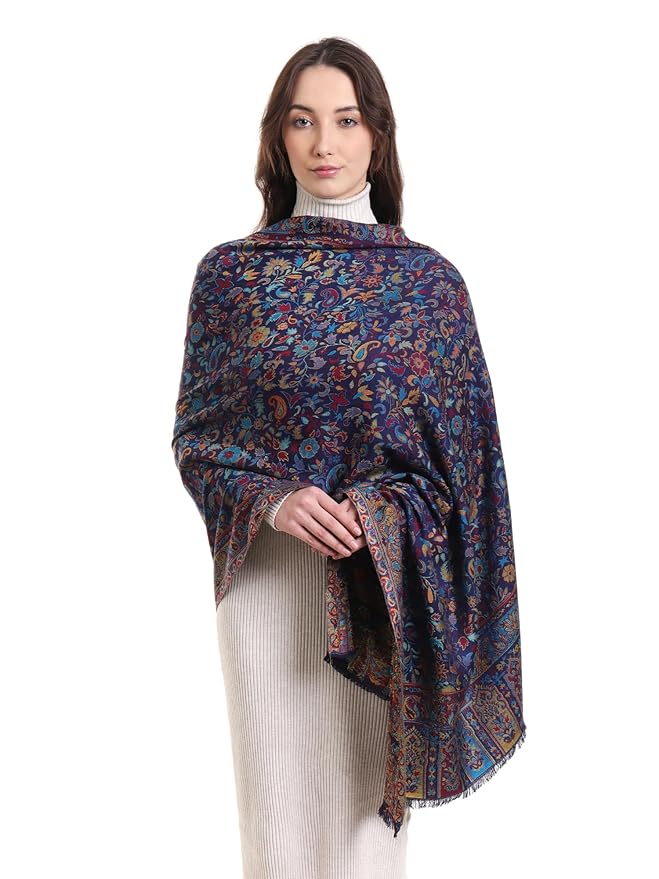
A finished Kani-weave pashmina stole
A single Kani shawl can take 18 months at the loom.
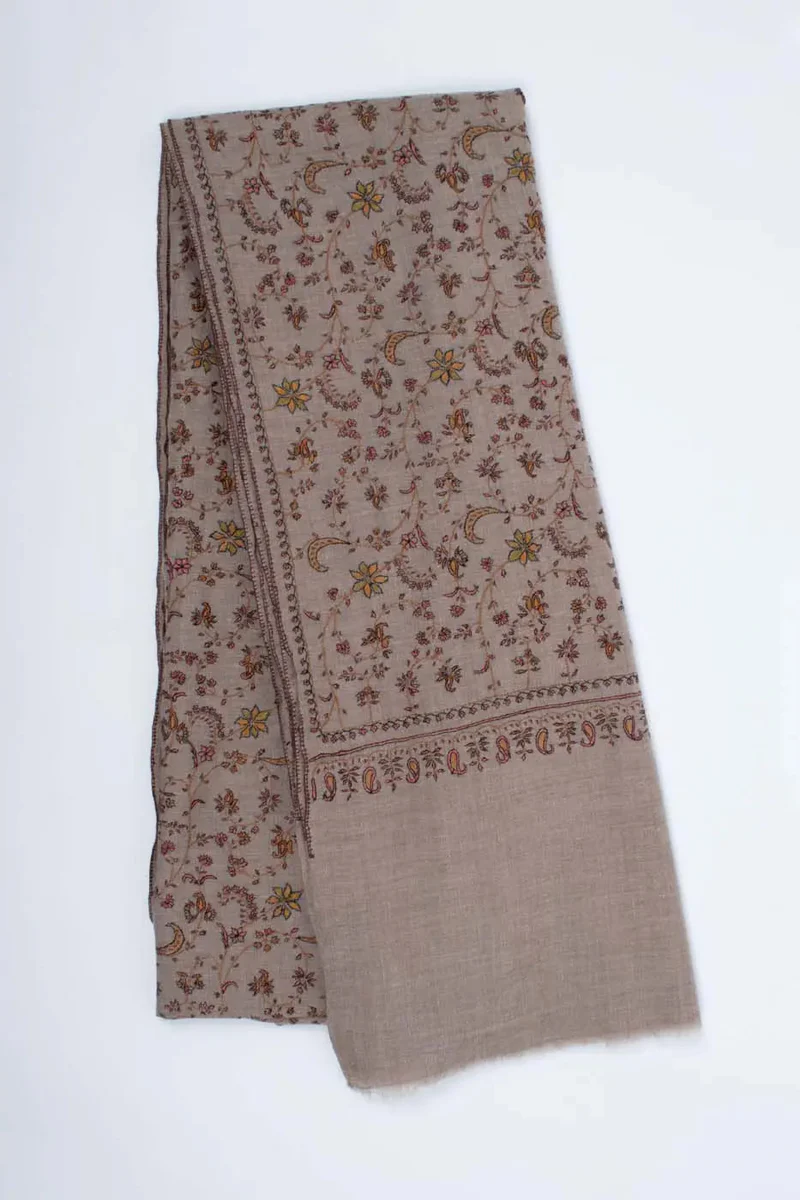
A plain pashmina stole
Plain pashmina — the base from which all variants are built.

History & context

Where this craft comes from

Pashmina-weaving reached Kashmir from Persia in the 15th century under the patronage of Sultan Zain-ul-Abidin (Budshah), who invited master weavers from Turkistan to settle in Srinagar. By the 18th century, Kashmiri pashmina shawls were trade-goods on the courts of Versailles and Tehran — Napoleon famously gifted one to Empress Josephine in 1796.

The colonial era nearly killed the craft when European mills replicated the look with merino. The GI tag, granted in 2008, did two things at once: legally pinned the name "Kashmir Pashmina" to its place of origin, and gave authentic weavers a price floor against machine fakes.

Frequently asked

About Kashmir Pashmina

How can I tell a real Kashmir Pashmina from a machine-made one?

Three quick tests: the GI tag (every authentic shawl carries a registration), the burn test (genuine pashmina smells like burning hair and turns to ash, not plastic), and the ring test (the shawl should pass through a finger ring — but lots of fine wools do too, so it's the weakest of the three).

Is Pashmina the same as Cashmere?

Pashmina IS cashmere — specifically, the very finest grade of it, from Changthangi goats raised in Ladakh. Most cashmere on the market is 18–22 microns; Kashmir Pashmina is 12–16. Below 14 microns is sometimes called "Toosh" and is rarer still.

Why does a Kani-weave pashmina cost so much more?

A plain pashmina is a few weeks at the loom. A Kani shawl is woven with up to 300 individual wooden bobbins, each carrying a different colour, with the design built up thread by thread — 18 to 24 months of full-time weaving for one piece.

How should I care for it?

Dry-clean once a year max. Otherwise, fold it flat (never on a hanger — pashmina stretches under its own weight), store with cedar or neem leaves against moths, and air it for a few hours every couple of months.

GI registered in 2008 (#GI-46).

Geographical Indications Registry, Government of India

Makers

Artisans working in this tradition

Buy a piece

Pieces under this GI tradition