

Kashmir Willow Cricket Bat: The Craft Behind Kashmir’s Most Iconic Sporting Legacy.
From the valleys of Kashmir to cricket grounds across the world, the Kashmir Willow bat carries a story of craftsmanship, resilience, and tradition.
The Story of Kashmir Willow Cricket Bat
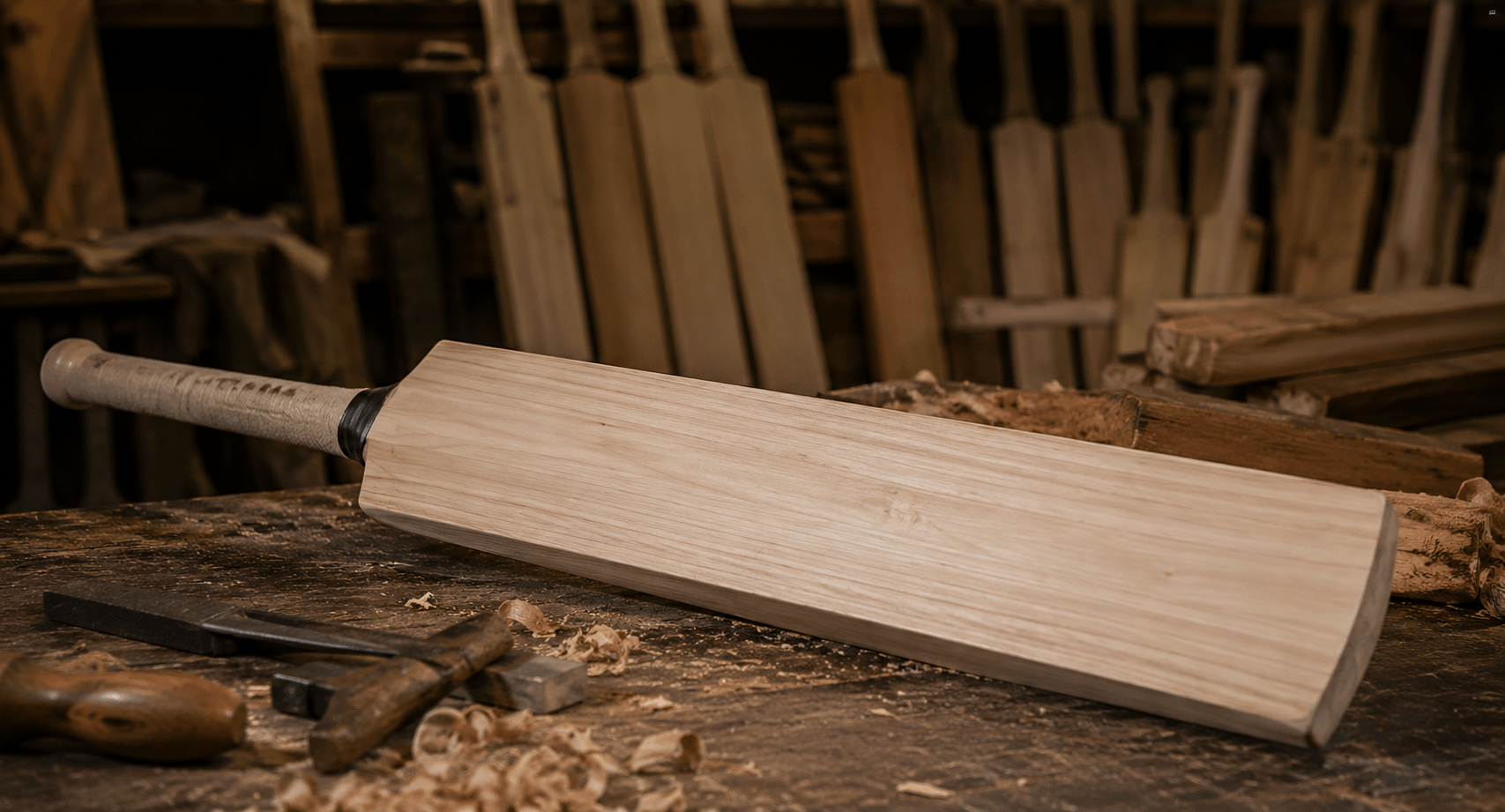
In Kashmir, cricket is more than a game—it is part of everyday life. Walk through the villages of Anantnag, Pulwama, or Srinagar, and you will find workshops where artisans transform locally grown willow into cricket bats that are used across India and beyond. The Kashmir Willow Cricket Bat is not just sports equipment; it is a product of geography, tradition, and generations of handcrafted expertise.
The willow used for these bats grows in the cool, fertile conditions of the Kashmir Valley. Over decades, local bat makers developed techniques that make the wood durable, responsive, and suitable for players ranging from beginners to professionals. Today, the Kashmir Willow Cricket Bat is recognized with a Geographical Indication (GI) tag, protecting its identity and linking it directly to its place of origin.
A Legacy Rooted in the Valley
The history of bat making in Kashmir dates back to the late nineteenth and early twentieth centuries, when willow trees planted across the valley began to be used for cricket equipment. As cricket grew in popularity, local craftsmen refined their methods of selecting, seasoning, and shaping willow into bats.
Unlike factory-produced sporting goods, many Kashmir willow bats are still made through a combination of hand tools and carefully controlled processes. Families involved in bat making often pass down their knowledge from one generation to the next, making each workshop a living archive of traditional craftsmanship.
What Makes Kashmir Willow Special?
Kashmir willow differs from English willow in density, grain structure, and playing characteristics. It is generally harder and slightly heavier, which gives the bat excellent durability and makes it especially suitable for leather-ball and tennis-ball cricket commonly played across South Asia.
Players appreciate Kashmir willow bats for their:
Strong hitting power Long-lasting performance Affordability compared to English willow bats Reliable performance on a variety of pitches
This balance of quality and value has made Kashmir willow one of the most widely used bat materials in the region.
 How a Kashmir Willow Bat Is Made
Creating a Kashmir Willow Cricket Bat involves several carefully executed stages:
Selection of Willow
Mature willow trees are selected from designated growing areas in Kashmir. The wood is chosen for its grain quality, moisture content, and structural strength.
Cutting into Clefts
The logs are cut into bat clefts, which form the basic shape of the future bat.
Seasoning
The clefts are seasoned naturally or through controlled drying to reduce moisture and stabilize the wood. Proper seasoning is essential for strength and performance.
Shaping
Artisans shape the blade, edges, shoulders, and handle using specialized woodworking tools. The profile of the bat is carefully balanced for pickup and stroke play.
Handle Fitting
A cane handle is fitted into the blade and reinforced with high-quality binding and adhesives.
Pressing
The blade is pressed to compact the wood fibers, improving durability and enhancing the bat’s playing performance.
Finishing
The bat is sanded, polished, stickered, and prepared for final inspection before reaching players and retailers.
A Bat That Carries Kashmir’s Identity
A Kashmir Willow Cricket Bat represents more than performance on the field. It reflects the landscape of the valley, the patience of artisans, and a tradition that has survived changing markets and generations of transformation.
For cricket lovers, owning a genuine Kashmir willow bat is not only a practical choice—it is a connection to one of India’s most distinctive craft traditions.
Story by KashmiGiMart Editorial Team
About the writer
Kashmir Artisan Journal
Kashmir Artisan Journal Editorial Team is a small editorial collective dedicated to documenting the living traditions of Kashmir—its artisans, crafts, landscapes, and the stories that survive through handmade work. Rather than treating craftsmanship as a product alone, the team approaches every article as a record of memory, skill, and cultural continuity. Their work is built through conversations with shawl weavers, wood carvers, papier-mâché artists, saffron growers, bat makers, and families who have practiced the same craft across generations.
The journal believes that the true value of a Kashmiri craft lies not only in its beauty, but in the hands that shape it, the villages that sustain it, and the history carried quietly through everyday labor. Each feature, artisan profile, and heritage essay is researched with care and written with the intention of preserving voices that are often overlooked in mainstream narratives.
By combining field-based storytelling, historical context, and contemporary documentation, the editorial team seeks to create an enduring archive of Kashmir’s artistic heritage—one that can be read by future generations as well as by readers discovering the Valley for the first time.
Website & Social Media Manager — RESHI RAYEES
The journal’s digital presence is managed by RESHI RAYEES, who oversees the website, editorial publishing, visual presentation, and social media strategy. His work focuses on bringing Kashmir’s artisan traditions into the digital world without losing the authenticity, dignity, and human stories behind each craft. Through careful curation and digital storytelling, he helps connect local makers with audiences across India and around the world.