Meet the last naqashi families of downtown Srinagar
Four neighbourhoods. About eighty households. A craft on the edge.

There are four old neighbourhoods in downtown Srinagar where you can still find a working naqash — a papier-mâché painter who works in mineral pigments and applies twelve coats of lacquer to a finished piece. Habba Kadal, Khan Yari, Rainawari, and a small cluster behind Zaina Kadal. Maybe eighty households between them.
This is what's left of a tradition that was, in the seventeenth century, royal patronage.
What naqashi is
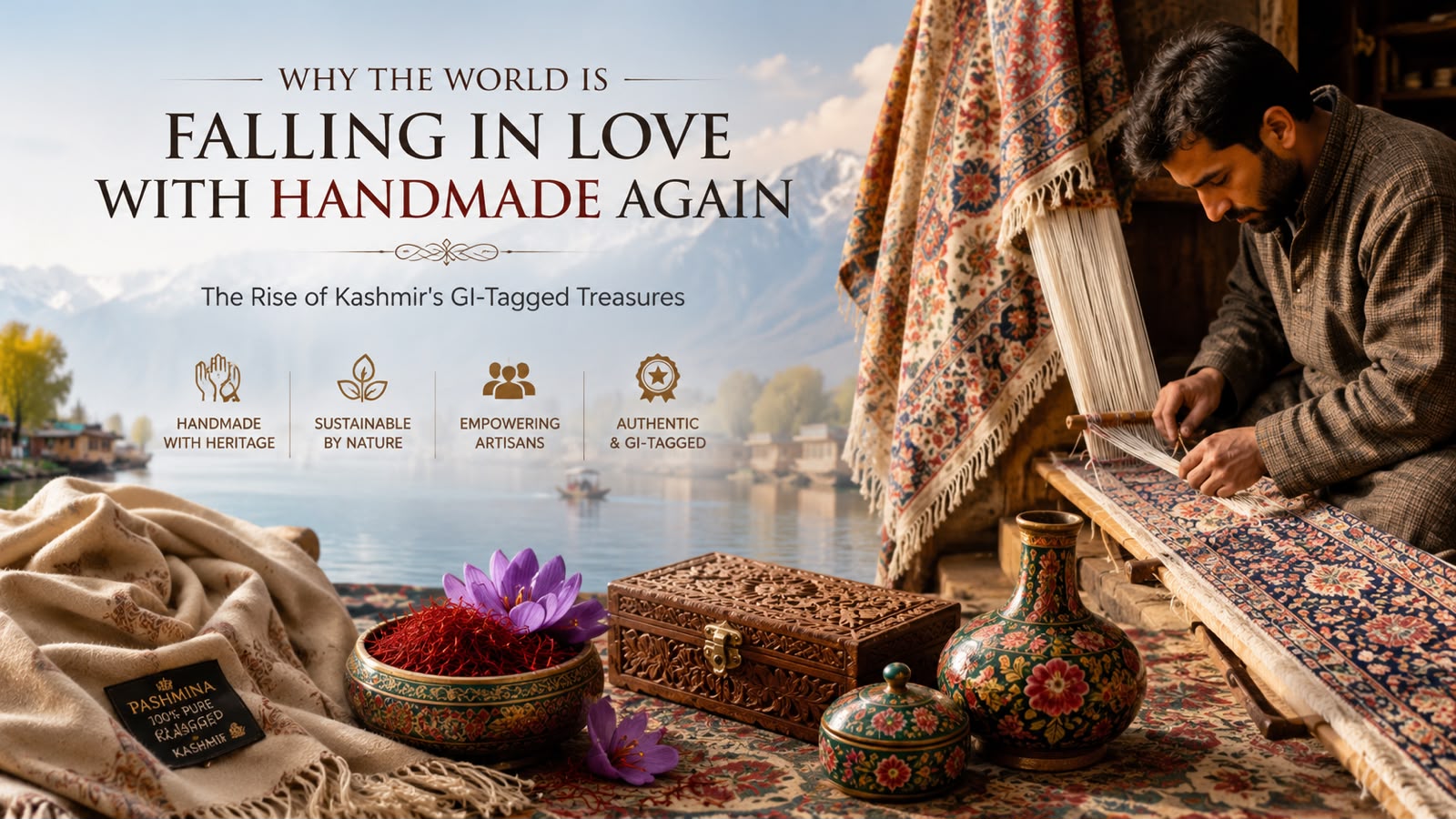
Kashmir papier-mâché is two crafts stacked on top of each other. The sakhtsazi — shape-makers — soak old paper for a week, mash it with rice paste and gypsum, and press it onto a wooden former. After several days of drying and burnishing, the shell goes to the naqash for the painting.
The painting is the part that takes weeks. A four-inch hexagonal box might carry eight thousand individual brush strokes, all freehand, in mineral pigments mixed by the painter that morning.
Why it's on the edge
Three reasons, and none of them are simple:
- Apprenticeship has thinned. A naqash used to take a student at six and train them for fifteen years. Today's six-year-olds go to school. Today's twenty-one-year-olds want a salary, not a master.
- The pigments are running out. True malachite green and genuine lapis blue have to be sourced from specific mines. Acrylic substitutes are easier and cheaper, but they fade in a decade.
- The market doesn't always notice. A tourist picking up a "papier-mâché box" at a state emporium can't easily tell printed transfer from hand-painting. The GI tag (#48, granted 2008) helps, but it isn't a substitute for an educated buyer.
What buying a real piece does
Every authentic piece is a week or more of one painter's full-time work, in a craft that pays nothing if no one buys. The maths is straightforward: a handful of conscientious buyers a year is literally the difference between a working naqash keeping their practice and walking away from it.
Some of the eighty households will close in the next ten years no matter what we do. The question is how many of them — and what we do with the work we still have time to commission.
About the writer
Founder
Zainab founded Kashmir Artisan Store in 2024 after a decade as a textile designer in Srinagar. She writes mostly about pashmina and the economics of cottage industry.