Aller au contenu principal
Kashmir GI Mart
GI · GI-176 · 2012

Kashmir Walnut Wood Carving

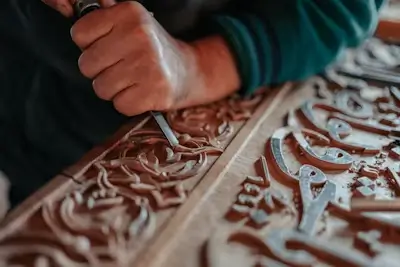
Hand-carved chinar leaves, Mughal jali and Pamposh motifs on the slow-growing walnut of the Kashmir valley.

Kashmir Walnut Wood Carving

The Kashmir walnut tree (Juglans regia) is one of the slowest-growing walnuts on earth — a hundred years to reach harvestable maturity. The tight, dark grain that comes out of it is dense enough to take detail no other walnut can hold, which is why the craft of Kashmir Walnut Wood Carving has survived as one of the most exacting in India.

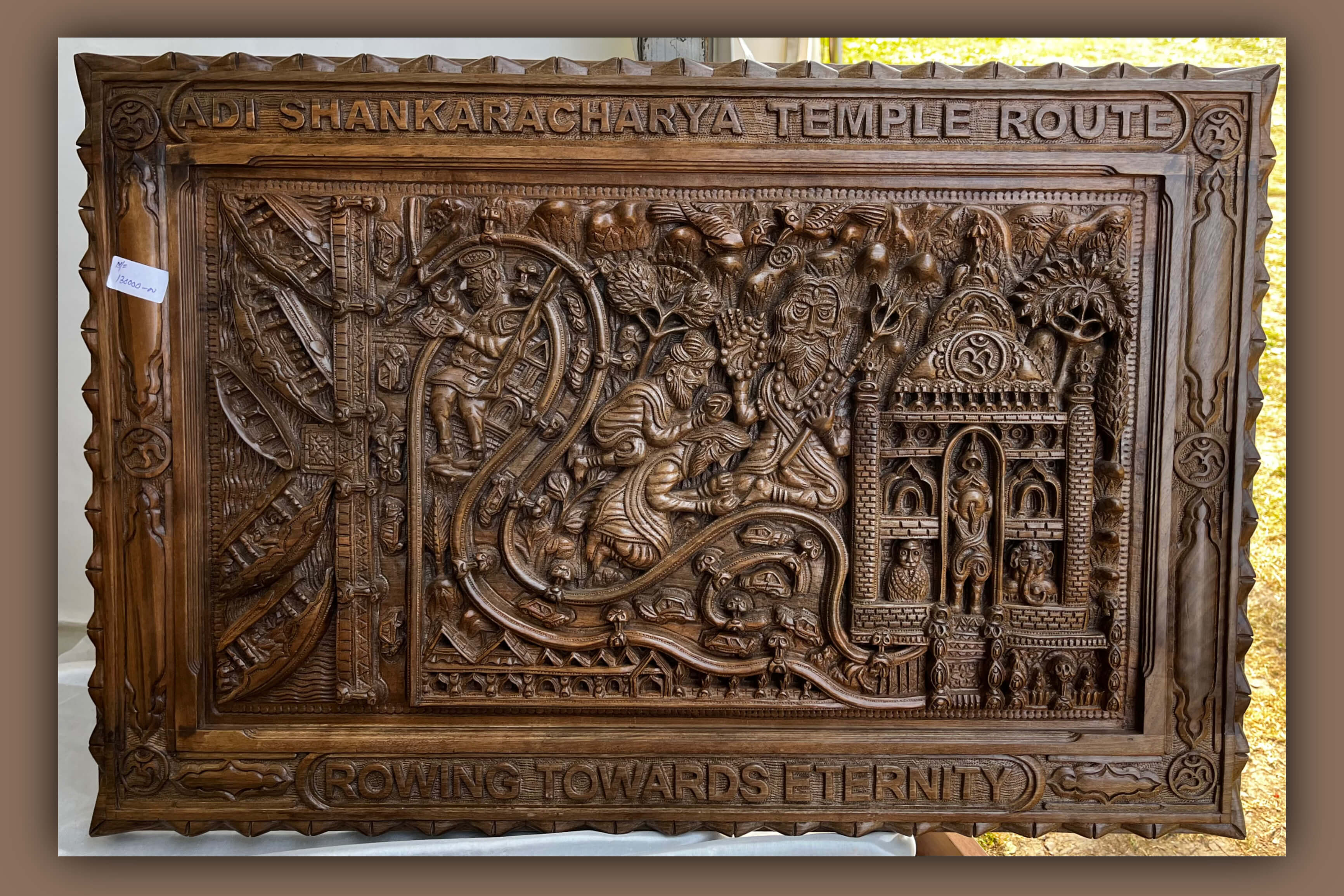
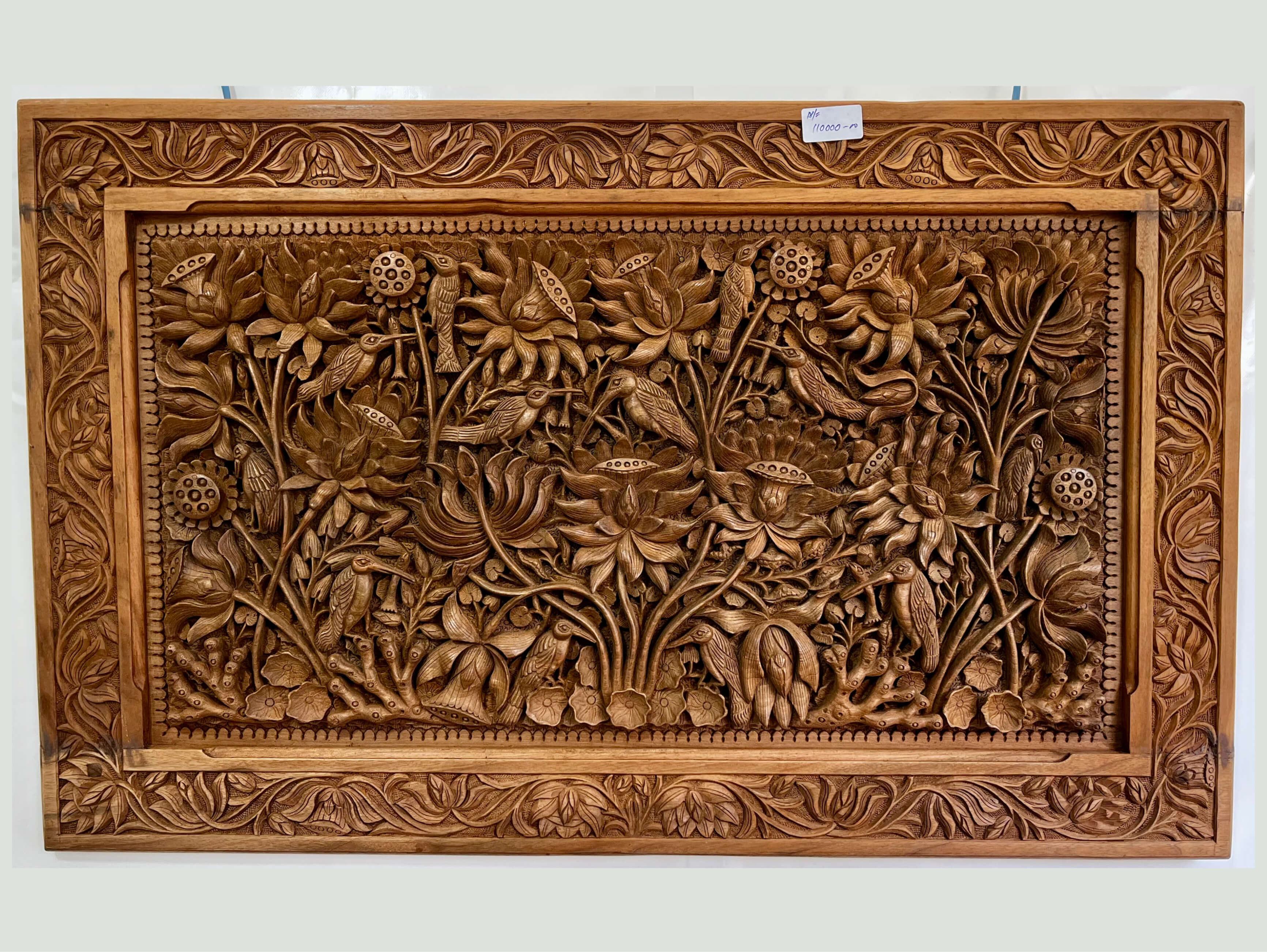
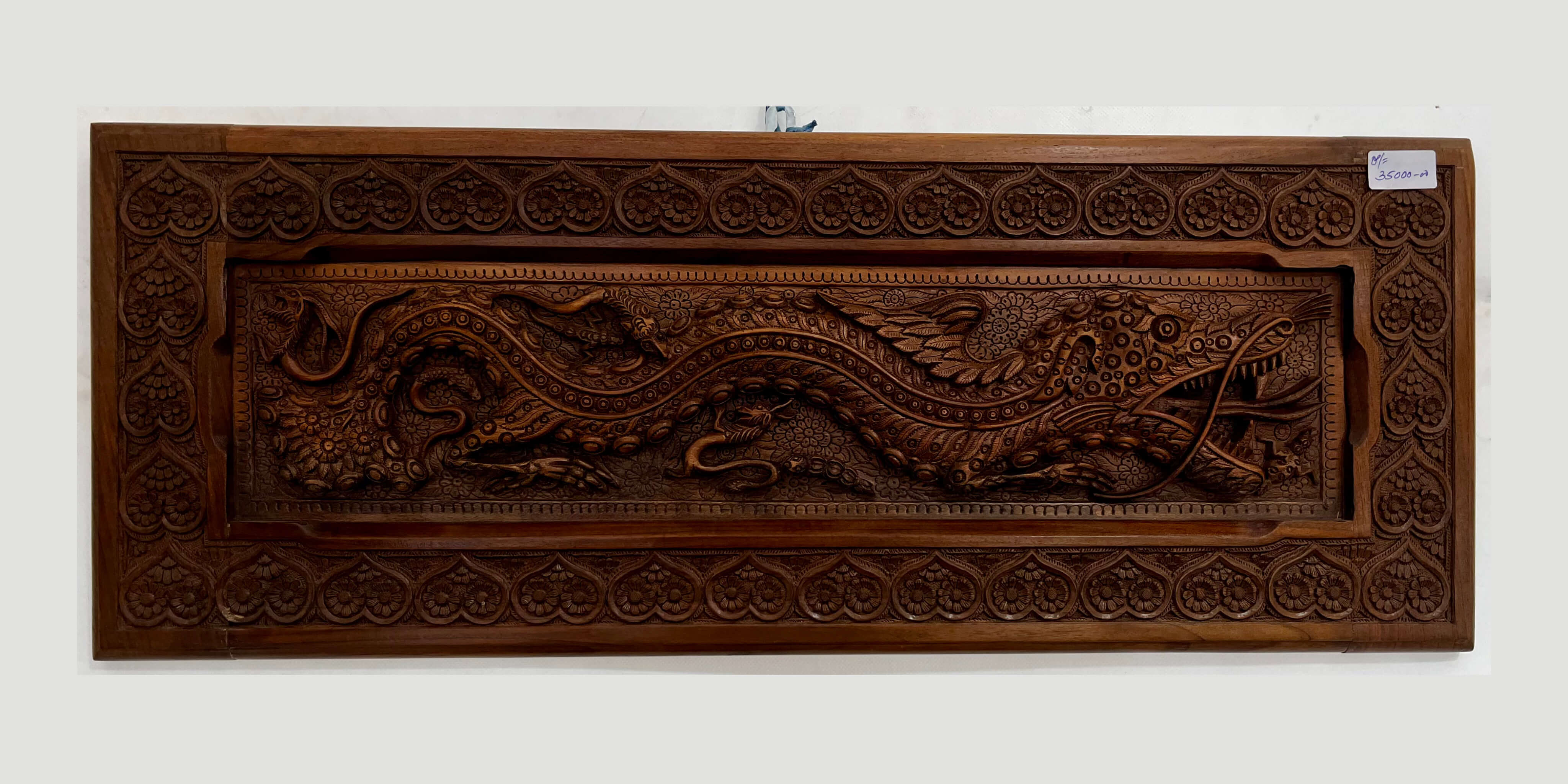
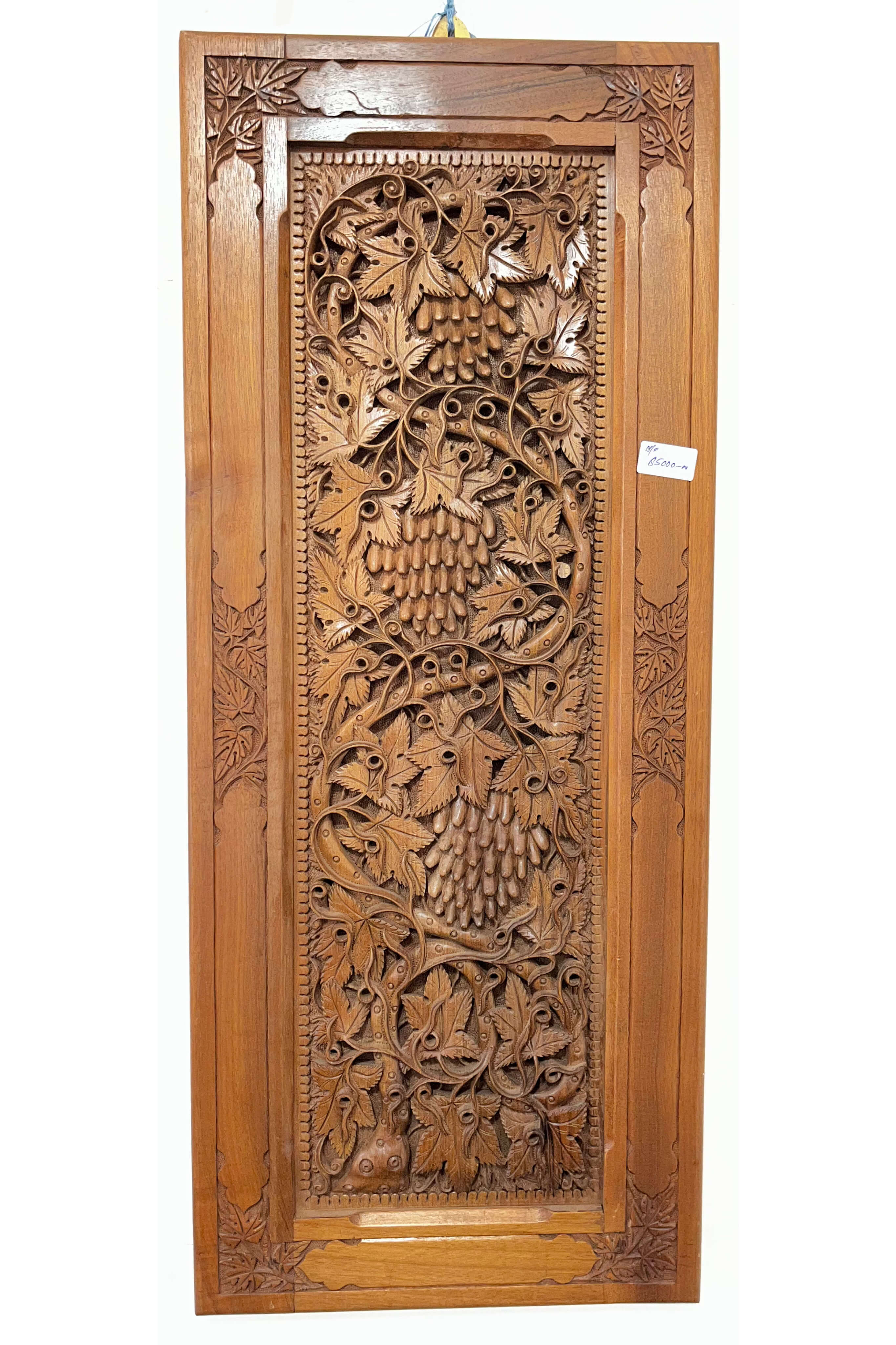
A finished panel carries four motif families: the chinar leaf (Pamposh), the Mughal lattice (jali), the dragon (Chinese-influenced through the Silk Route) and the floral arabesque (Persian).

The process

How it’s made

How a panel is made

  1. Seasoning. Walnut planks are cut and air-dried for 3 to 5 years under cover. Kiln-drying cracks the grain.
  2. Layout. The carver traces the pattern in chalk, freehand, onto the seasoned panel. No printed templates.
  3. Outlining (khoda kaam). Each motif is outlined with a chisel at 1–2 mm depth.
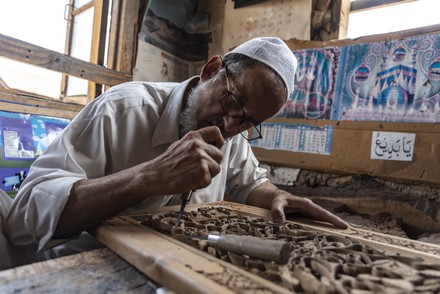
  4. Deep-relief carving (vaboroon). Background is dropped 6–10 mm below the design, then the motifs are rounded and detailed. A single square foot can take a week of full-time work.
  5. Open-work (jali). Lattice panels are pierced all the way through, then sanded by hand. One slip cracks the panel and weeks of work go.
  6. Oil finish. Linseed and walnut oil only. No varnish, no stain — the dark colour is the wood itself, deepening with age.

Gallery

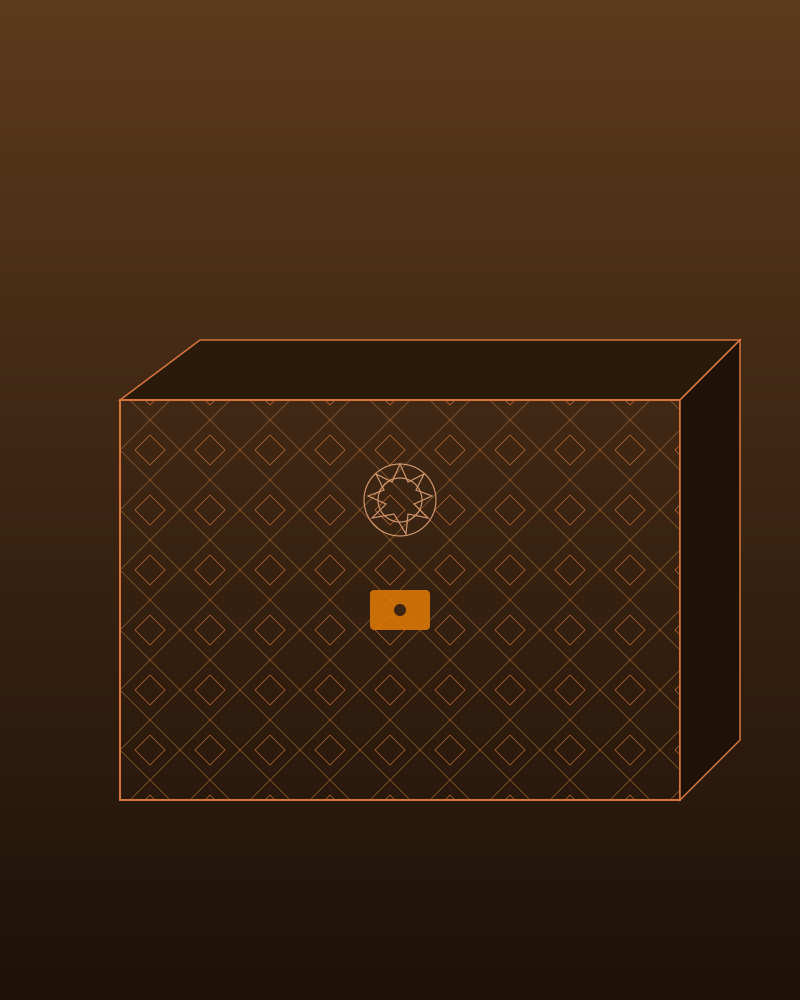
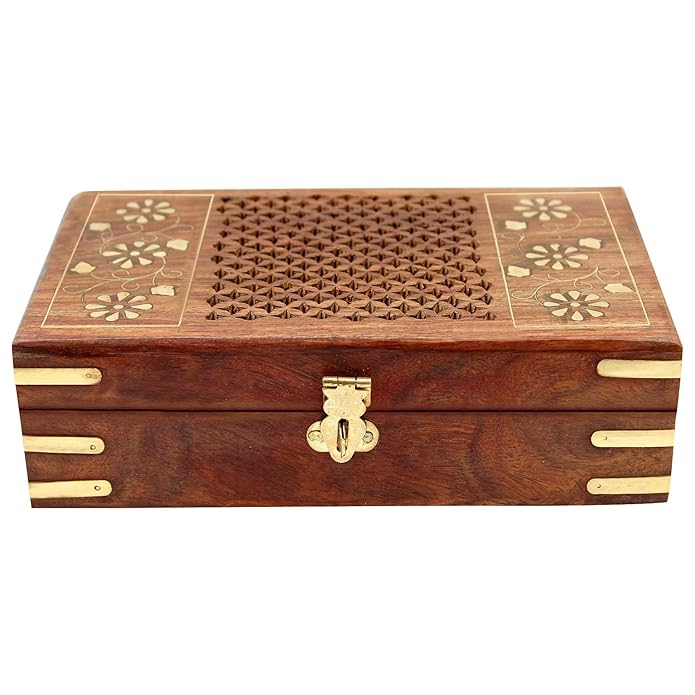
A walnut wood jewellery chest with chinar-leaf carving
Chinar-leaf relief on jewellery-chest panels.
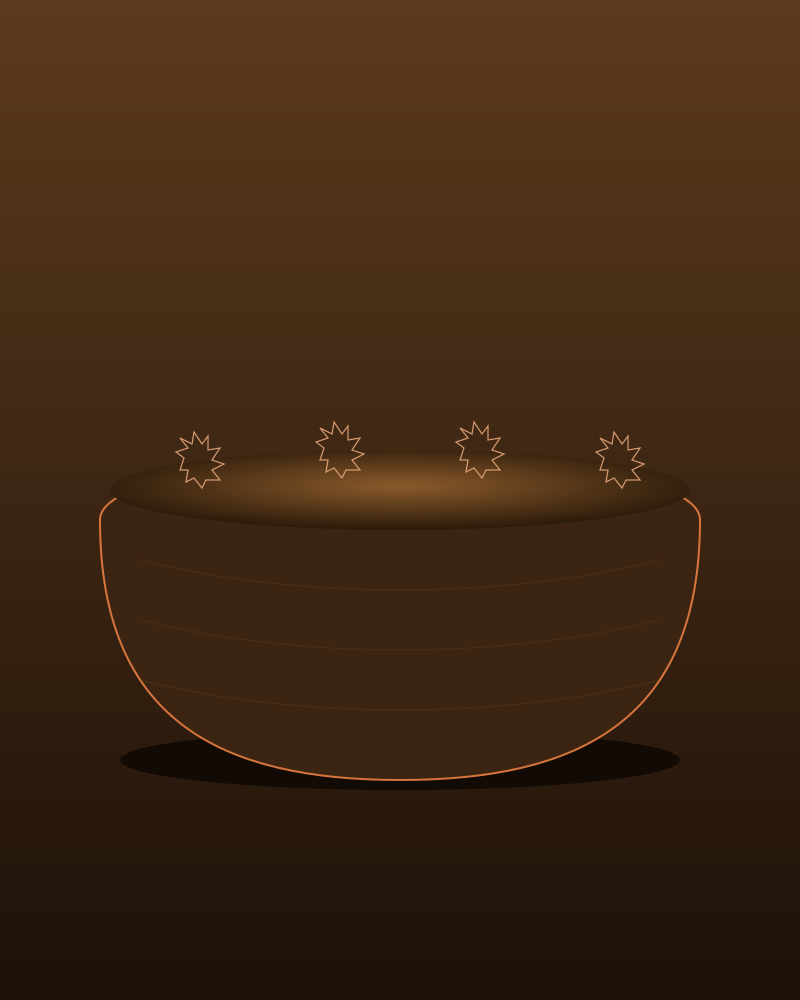
A carved walnut bowl with chinar motif
A bowl turned and carved from one piece of walnut heartwood.

History & context

Where this craft comes from

Walnut-carving entered Kashmir in the 15th century alongside pashmina, under the same Sultan Zain-ul-Abidin patronage. The pieces were originally architectural — khatamband ceilings, pinjarakari window screens — and migrated to furniture and small objects only after the craft survived British-era cottage-industry programmes that prized portability.

The GI tag protects the craft against two threats: cheaper imported walnut from California (which lacks the grain density) and faster mango-wood substitutes painted to look like walnut. Authentic pieces carry the registration on the tax invoice.

Frequently asked

About Kashmir Walnut Wood Carving

How do I tell genuine Kashmir walnut from substitutes?

Two giveaways: the grain (Kashmir walnut is tight and dark with subtle figuring; mango wood is open and bland; California walnut is paler and looser) and the carving depth (only Kashmir walnut takes 6–10 mm relief without crumbling). The GI invoice is the legal proof.

Will it survive humidity outside Kashmir?

Yes — but oil it once a year with linseed or walnut oil to keep the grain from drying. Avoid direct sunlight for long periods (it bleaches the colour).

Why are large pieces so much more expensive than small ones?

It's not just the wood. A 12-inch square open-work jali panel can take three weeks of one carver's full-time labour, and one mis-cut cracks the panel beyond repair.

Is the craft endangered?

It's under pressure. Carvers are ageing, the slow-growing walnut is being over-harvested, and apprenticeships have thinned. The GI tag + direct-from-artisan sales (no middleman) is one of the few things keeping working carvers in income.

GI registered in 2012 (#GI-176).

Geographical Indications Registry, Government of India

Makers

Artisans working in this tradition

Buy a piece

Pieces under this GI tradition