Aller au contenu principal
Kashmir GI Mart
GI · GI-48 · 2008

Kashmir Papier-Mâché

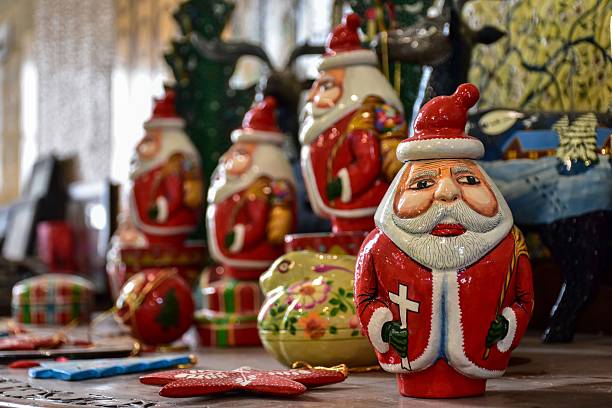
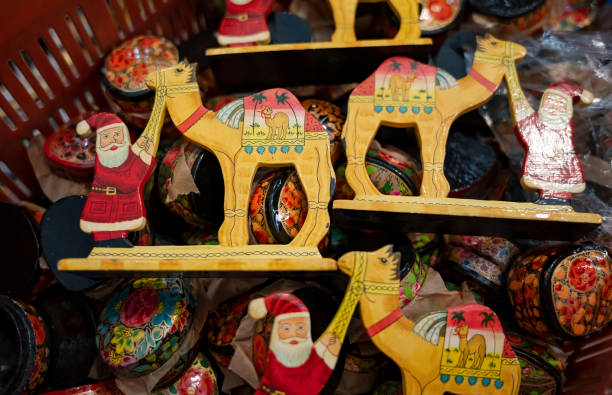
Lacquered pulp art — boxes, ornaments and panels painted free-hand in mineral pigments, finished in 12 coats of varnish.

Kashmir Papier-Mâché

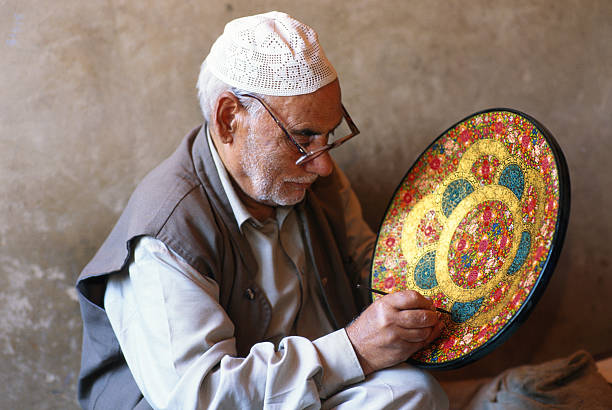
Kashmir Papier-Mâché (locally kar-i-kalamdani) is two crafts stacked on top of each other: the sakhtsazi (shape-makers), who build the object out of soaked paper pulp, and the naqashi (painters), who turn the dried object into a miniature painting in tempera. Authentic pieces are signed by both.

It's the oldest continuous lacquer-art tradition in India, and the only one that uses vegetable and mineral pigments to this day — malachite green, lapis blue, vermilion red, and 24-carat gold leaf for the highlights.

The process

How it’s made

How a box is made

  1. Pulp (kagaz). Old paper is soaked in water for a week, mashed with rice paste and gypsum, and pounded into a dough.
  2. Moulding. The dough is pressed by hand onto a wooden or clay former and left to dry for several days.
  3. Burnishing. The dry shell is sanded with horn or agate until silky-smooth — the smoother the base, the cleaner the paint job.
  4. Base coat. Two thin coats of white tempera prepare the surface.
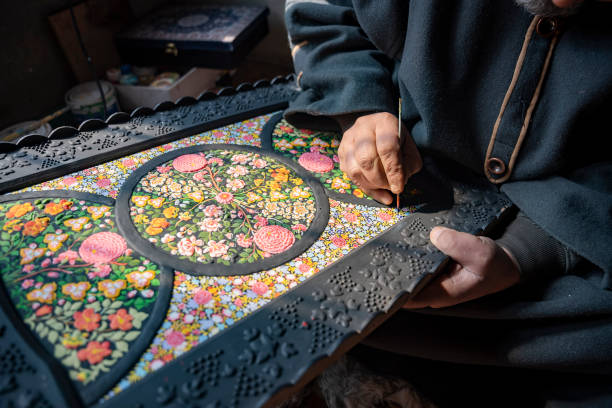
  5. Painting (naqashi). The motif is drawn free-hand and filled in with mineral pigments. A 4-inch box can take two weeks; a museum- grade panel, months.
  6. Lacquering. Twelve to fifteen coats of clear lacquer, each sanded between coats. The final surface is glass-smooth and the paint never touches a finger.

Gallery

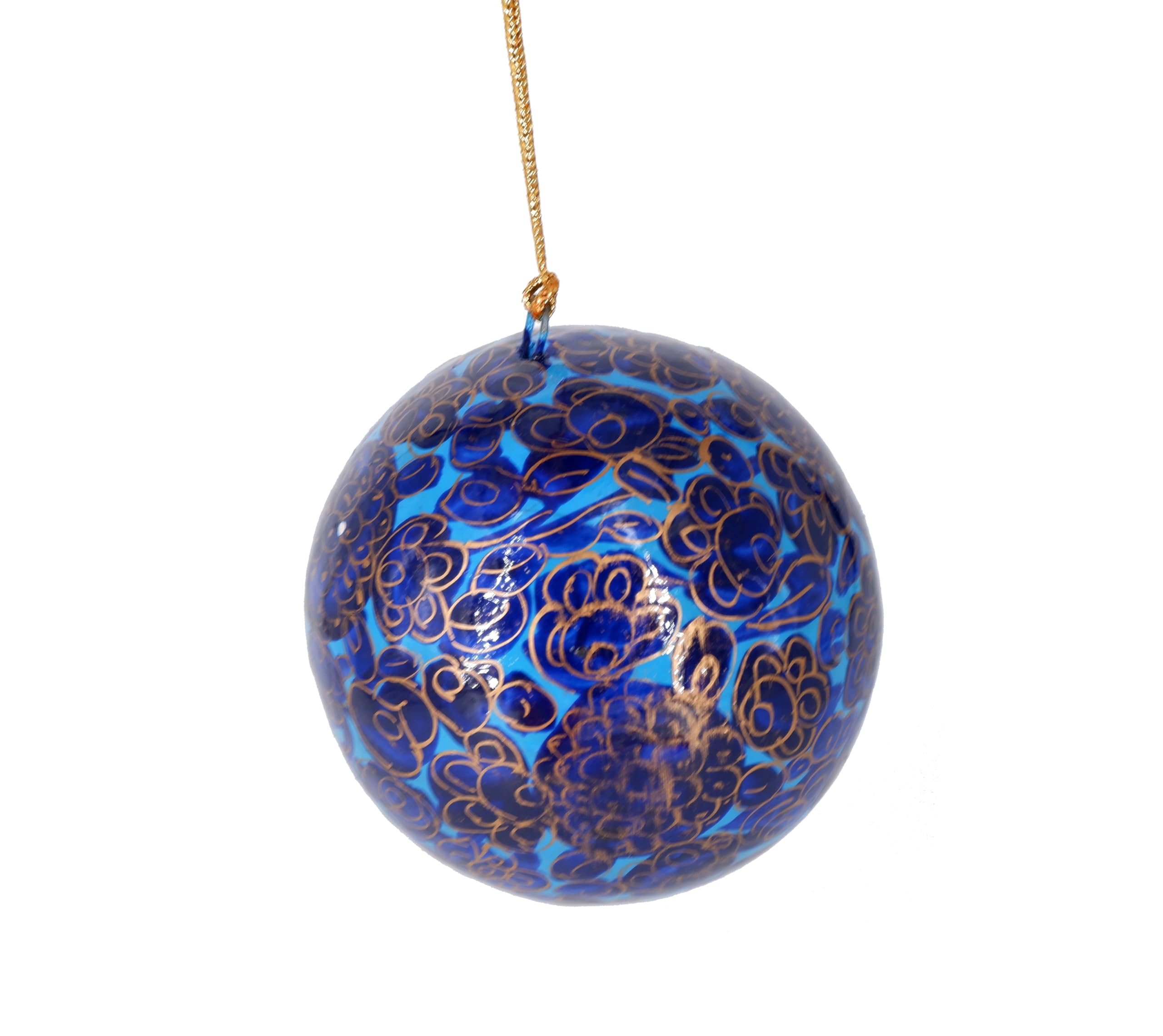
A painted papier-mâché box with floral motif
A hexagonal box, hand-painted and 12-coat lacquered.

History & context

Where this craft comes from

The craft arrived in Kashmir in the 14th century with the Persian mystic Mir Sayyid Ali Hamadani, who brought a school of naqash painters with him from Hamadan. By the Mughal era it was royal patronage; in the colonial era it became a cottage industry. Today authentic naqashi households are concentrated in downtown Srinagar in three or four old neighbourhoods.

The GI tag stops two things: machine-printed transfer patterns sold as "hand-painted", and acrylic pigments masquerading as mineral colour. An authentic piece — paint-stroke under glass — is unmistakable once you've seen one.

Frequently asked

About Kashmir Papier-Mâché

How do I tell hand-painted from machine-printed?

Look closely under raking light: hand-painted motifs have brush-stroke texture and tiny inconsistencies (a leaf veined slightly differently from its neighbour). Printed transfer is mathematically identical from one motif to the next. The GI invoice and the painter's signature on the base are the legal answer.

Are the colours stable over time?

Yes, when they're true mineral pigments under proper lacquer. A real Kashmir papier-mâché piece from 1900 still holds its colour. Acrylic fakes fade in a decade.

Can it be washed?

Wipe with a barely-damp soft cloth. Don't soak. Don't use detergent. The lacquer is hard, but the underlying paint and pulp are not waterproof — submerging will crack them.

Why is the price range so wide?

It's painter-hours. A simple 3-inch ornament is a day's painting; a large wedding box with gold leaf can be 200 hours. Genuine pieces are priced by the painter's time, not by size.

GI registered in 2008 (#GI-48).

Geographical Indications Registry, Government of India

Makers

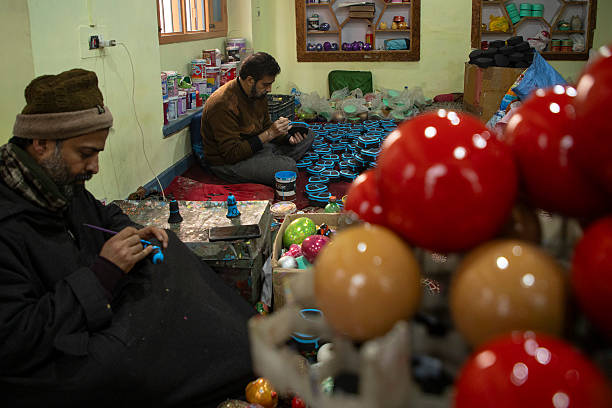
Artisans working in this tradition

Buy a piece

Pieces under this GI tradition